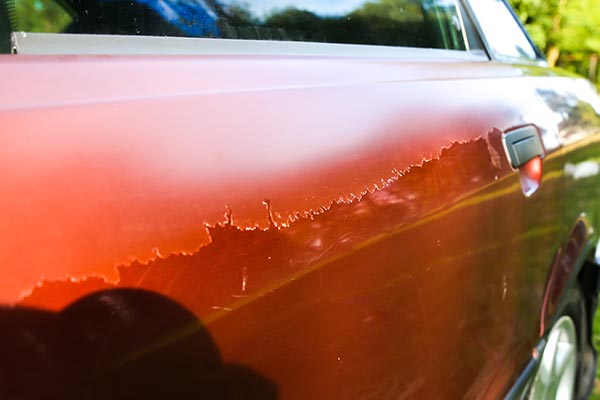
Paint correction is the process of removing swirl marks, fine scratches, oxidation, and surface defects from your vehicle’s paint through machine polishing — restoring optical clarity and gloss that no hand polish or detailing spray can achieve. Invisible Touch Inc. provides single-stage and multi-stage paint correction in Bedford, MA, serving the greater Boston metro area.

200+ Happy Customers
in Bedford, MA

Paint correction is the controlled removal of a thin layer of clear coat through machine polishing, leveling the surface to eliminate scratches, swirl marks, water spots, and oxidation that live above the undamaged clear coat floor. The process uses a rotary or dual-action machine polisher with graduated abrasive compounds — starting with a more aggressive cut compound to address deeper defects, then refining with lighter polishes to restore gloss and clarity.
Modern automotive clear coats are typically 40–80 microns thick. Swirl marks, fine scratches, and surface oxidation sit within the top 5–15 microns of that layer. Machine polishing removes just enough clear coat to bring the surface level below the base of those defects — what remains is optically smooth, maximally reflective paint.
Paint correction is appropriate for any vehicle with visible swirl marks, oxidation, or surface scratches in the clear coat. The most common candidates are vehicles preparing for ceramic coating or PPF installation, daily drivers with accumulated car wash damage, new cars with dealer-induced swirl contamination from improper prep buffing, and vehicles being detailed for resale or appraisal. If your paint looks dull under direct sunlight or shows circular marks under parking lot lighting, it is a candidate for correction.

A single polishing pass using a light-to-medium compound followed by a finishing polish. One-stage correction removes 40–70% of surface defects and significantly improves gloss and clarity on paint that is in reasonable condition. It does not fully address deeper swirl marks or scratches — those require additional cutting steps.
Daily drivers with mild to moderate swirl contamination who want meaningful improvement without the cost and time of full correction. Vehicles that will receive an entry-level ceramic coating. Vehicles with paint that is already in good condition and needs refreshing rather than full restoration.
Duration: 6–8 hours (1 full day)

A multi-step process beginning with a heavier cut compound to address deeper defects, followed by a medium polish to remove compound marks, then a finishing polish to maximize gloss. Two-stage correction removes 85–95%+ of correctable surface defects on paint in good structural condition.
Vehicles preparing for premium ceramic coating or PPF installation - defects sealed under a long-term coating are permanent. Vehicles that will be sold or valued, where paint condition directly affects the appraisal. Enthusiast and show vehicles where paint clarity is part of the presentation. Vehicles with significant swirl accumulation, buffer trails from prior amateur polishing, or moderate oxidation.

Ceramic coating and paint protection film are permanent applications - whatever is on the paint surface at the time of application is sealed in place for the life of the product. This is the most important sentence on this page. A ceramic coating applied over swirl-marked paint makes those swirls permanent. A PPF film installed over oxidized paint traps that oxidation beneath an adhesive layer that cannot be removed without removing the film.
Paint correction before ceramic coating is not optional for any coating that will be on the vehicle for more than a year. Our Standard and Premium ceramic coating packages include a one-stage or two-stage correction step for exactly this reason. The correct investment is recovered many times over in the quality of the finished result.
Paint correction before PPF installation ensures the paint visible through the transparent film is in the best possible condition. Buyers who invest in full vehicle PPF are making a long-term commitment - the paint beneath that film should be as correct as possible before it is covered.
We inspect every panel under high-intensity LED correction lighting before touching the vehicle. This reveals the full extent of swirl marks, scratches, and defects that are invisible under normal lighting. We also use a paint depth gauge to measure clear coat thickness on each panel - ensuring we know how much material is available to work with before any polishing begins.
Before polishing, all painted surfaces are decontaminated - iron decontamination spray, clay bar, and IPA wipe-down. Polishing contaminated paint drags particles across the surface, creating new scratches rather than removing existing ones. Decontamination is not skippable.
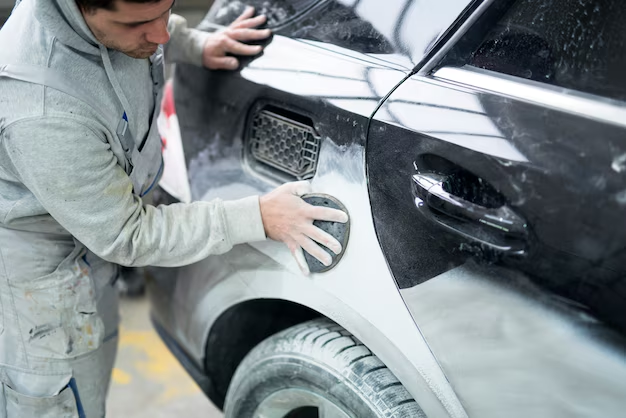
Using a dual-action or rotary polisher, we work through the panel systematically - applying compound or polish to a small section, working it to full cut, then removing the residue and inspecting under lighting before moving to the next section. For two-stage correction, the cut compound pass is followed by a finishing polish pass on all surfaces. We verify defect removal at each section before proceeding.
After all polishing is complete, the entire vehicle is inspected under correction lighting for remaining defects, high spots, or areas requiring additional work. The paint is then wiped with an IPA solution to strip all polish oils from the surface - leaving the paint clean and ready for ceramic coating, PPF, or delivery if correction was a standalone service.
Paint correction in Massachusetts costs $300–$500 for a one-stage enhancement and $600–$1,200 for a two-stage full correction on a standard sedan. SUVs and larger vehicles are priced higher due to panel count and surface area. Paint correction is often bundled with ceramic coating — our Standard and Premium coating packages include correction as part of the service. Standalone correction without a follow-on coating is available at the same price. We provide a written estimate after the initial paint inspection.
One-stage paint correction takes a full day 6-8 hours on a standard vehicle. Two-stage correction takes 10–16 hours and is typically scheduled over two days. The process cannot be rushed each section must be worked fully and inspected before moving on. Vehicles are not released until the full correction and final inspection are complete.
Paint correction should be performed only as often as defects require it — not on a fixed schedule. Each correction session removes a small amount of clear coat. A vehicle with 80 microns of clear coat can tolerate 4–6 full correction cycles before the clear coat becomes too thin to safely polish. Ceramic coating after correction significantly slows swirl reaccumulation, reducing how often correction is needed. Most coated vehicles are corrected at coating renewal intervals — every 3–5 years, depending on the coating system.
Consumer dual-action polishers and consumer-grade compounds can improve mild swirl marks on forgiving paint systems, but they cannot deliver the same defect removal depth as professional equipment and technique. Professional rotary and forced-rotation polishers generate more cutting energy and can be controlled precisely to address deeper defects without burning through clear coat edges. For a daily driver with light swirls, a quality consumer polish application is a reasonable maintenance step. For pre-coating correction on a high-value vehicle, professional correction is the correct choice.
New cars frequently benefit from paint correction before ceramic coating. Transportation, dealer preparation, and lot exposure all introduce swirl marks and surface contamination before the buyer takes delivery. The intensity of correction needed depends on how the dealership prepared the vehicle — some new cars need only decontamination and a light polish, others arrive with significant swirl contamination from incorrect machine buffing during prep. We inspect every new vehicle before recommending a correction stage rather than assuming the paint is perfect.
Contact Invisible Touch Inc. for a paint correction assessment. We inspect your paint under correction lighting, measure clear coat depth, and recommend the right correction stage before any polishing begins. Written estimates provided after inspection. No obligation.