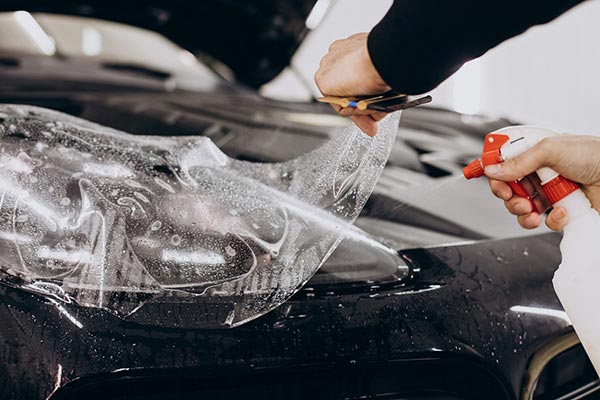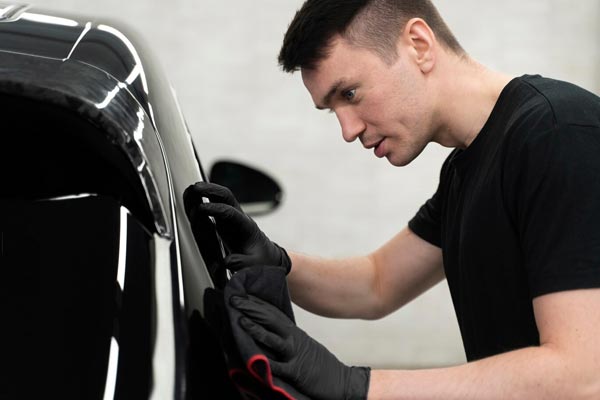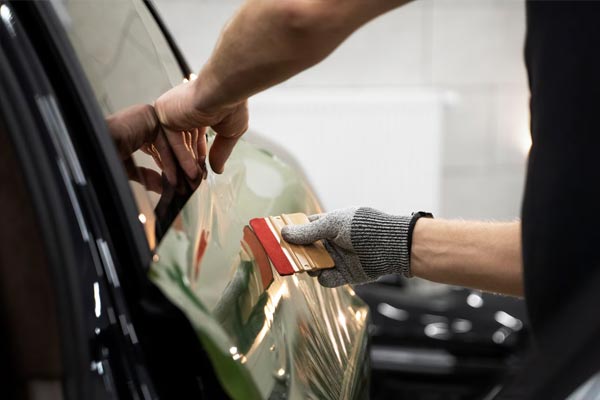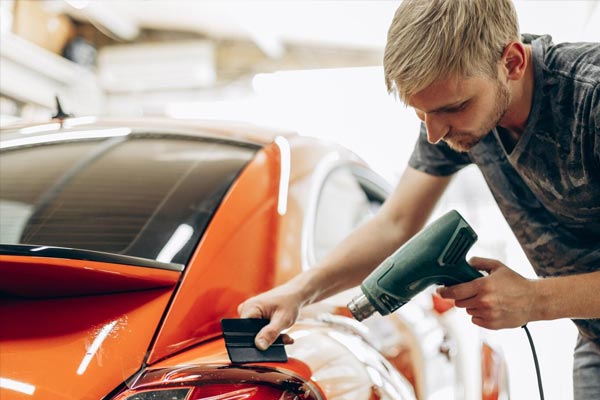
Ceramic coating and paint protection film (PPF) protect your vehicle in fundamentally different ways. Ceramic coating is a liquid polymer that bonds to your paint and creates a chemical barrier against UV rays, water spots, bird droppings, and road contaminants. PPF is a transparent urethane film that acts as a physical barrier, absorbing rock chips, scratches, and road debris before they reach the paint surface. Ceramic coating enhances appearance and simplifies maintenance. PPF prevents physical damage. They are not interchangeable — and for many vehicles, the best option is to use both together.
The right choice depends on one key factor: whether you need to protect against physical damage or environmental damage. The comparison below breaks down exactly how each product performs across cost, durability, appearance, and protection type.

200+ Happy Customers
in Bedford, MA
|
Attribute |
Ceramic Coating |
Paint Protection Film (PPF) |
|
Protection type |
Chemical barrier — bonds to paint at the molecular level |
Physical barrier — transparent urethane film absorbs impacts |
|
Protects against |
UV rays, water spots, bird droppings, tree sap, road salt, chemical etching |
Rock chips, scratches, road debris, gravel strikes, bug impact damage |
|
Does NOT prevent |
Rock chips, deep scratches, or physical impact damage |
Chemical etching, water spots, or UV degradation (unless coated) |
|
Durability |
2–5 years, depending on coating grade and maintenance |
5–10 years, depending on film quality and installation |
|
Cost range |
$800–$2,500 for professional application |
$1,200–$6,000+ depending on coverage area |
|
Appearance |
Enhances gloss and color depth — wet-look finish year-round |
Nearly invisible when professionally installed — does not add gloss |
|
Maintenance |
Hydrophobic surface repels water and contaminants — easier to wash |
Requires periodic inspection; not hydrophobic unless ceramic-coated on top |
|
Self-healing |
No self-healing properties |
Premium films self-heal minor scratches with heat exposure |
|
Best for |
Daily drivers, appearance-focused owners, vehicles in low-debris environments |
Highway commuters, luxury vehicles, and high-impact areas like hoods and bumpers |

Ceramic coating is the right choice when your primary concern is appearance, maintenance reduction, and environmental protection.
Choose ceramic coating if:
Learn more about our ceramic coating packages, including 9H and graphene options, on our service page.
PPF is the right choice when your priority is preventing physical damage to the paint surface. Choose PPF if:
View our paint protection film installation options, including partial and full-body coverage.


Yes - ceramic coating and PPF work together, and the combination provides the most complete paint protection available. PPF absorbs physical impacts on high-risk panels while ceramic coating adds hydrophobic properties, UV resistance, and enhanced gloss across the entire vehicle — including over the film itself.
PPF on its own is not hydrophobic. Contaminants can stick to uncoated film and become difficult to remove over time. Applying ceramic coating over the PPF gives the film water-repelling properties, makes it easier to clean, and adds UV protection that extends the film’s lifespan.
Both ceramic coating and PPF preserve the original factory paint, which is critical for maintaining long-term resale value. The combination eliminates the two primary sources of paint degradation: physical impact damage and environmental chemical damage.
Choosing the right protection depends on how you drive, where you drive, and how long you plan to keep your vehicle.
Invisible Touch Inc. installs both ceramic coating and paint protection film at our Bedford, MA, facility. Request a free quote to discuss the right combination for your vehicle.
Ceramic coating and PPF protect against different threats, so neither is universally better. Ceramic coating is better for UV protection, chemical resistance, and appearance enhancement. PPF is better for physical impact protection against rock chips, scratches, and road debris. The best option depends on your driving conditions and what type of damage you want to prevent.
Yes. Ceramic coating bonds to PPF surfaces and gives the film hydrophobic properties it does not have on its own. Applying ceramic coating over PPF makes the film easier to clean, adds UV resistance, and extends the film’s functional lifespan. The recommended order is PPF first, then ceramic coating over the entire vehicle.
Professional ceramic coating lasts 2–5 years, depending on the coating grade and maintenance. Paint protection film lasts 5–10 years, depending on film quality, installation, and environmental exposure. PPF has a longer single-application lifespan, but ceramic coating can be reapplied at a lower cost per cycle.
PPF is worth the extra cost if your vehicle is regularly exposed to rock chips, road debris, or gravel — conditions where ceramic coating provides no physical impact protection. For highway commuters, luxury vehicle owners, and drivers who prioritize preserving factory paint, the higher upfront cost of PPF pays for itself in avoided paint repairs and maintained resale value.
You do not need both, but combining them provides the most complete protection. PPF prevents physical damage to high-impact panels. Ceramic coating protects the entire vehicle from UV degradation, chemical etching, and water spots while making every surface easier to clean. For high-value vehicles or owners who want maximum protection, the combination is the recommended approach.
If your vehicle was in a collision, structural damage may not be visible from the outside. Invisible Touch Inc. provides a full computerized frame assessment at no charge — so you know exactly what the repair requires before committing to anything.