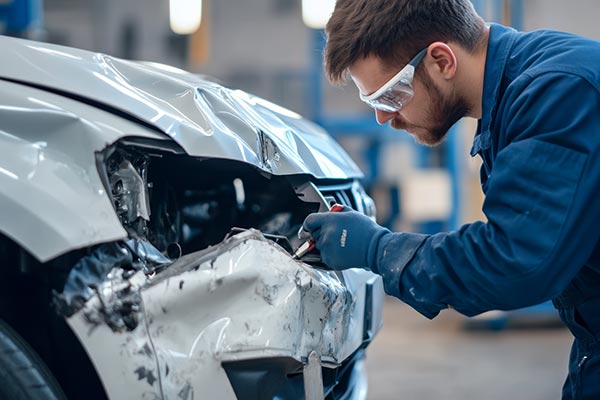
Most collision repairs take 3-10 business days from the day your vehicle enters the repair bay. The actual timeline depends on four factors: the severity of the damage, parts availability, whether structural repair is required, and paint cure time. Here’s what each factor means in practice.

200+ Happy Customers
in Bedford, MA
|
Damage Level |
Typical Timeline |
Key Factors |
|
Minor (cosmetic only) |
1–3 business days |
Bumper scuffs, small dents, and single-panel scratch repair. No structural involvement. Paint cure is the primary time factor. |
|
Moderate (panel damage) |
3–7 business days |
Panel replacement or reshaping, partial repaint, and possible parts ordering. Insurance authorization may add 1–2 days. |
|
Major (structural) |
7–14+ business days |
Frame straightening, multiple panel replacement, and full repaint. Parts backorder and insurance supplements are the primary timeline risks. |
|
Total loss evaluation |
3–5 business days |
Inspection and documentation only. If the insurer declares a total loss, repair does not proceed. |
These ranges assume parts are in stock and insurance authorization is completed before repair begins. Either factor can add 2–5 business days to any category.
Parts backorder is the single most common reason a collision repair exceeds the estimated timeline. OEM parts for domestic vehicles typically ship within 2–3 days. European and luxury brand parts can take 5–10+ business days, depending on the part and supplier. Aftermarket alternatives ship faster but may not meet OEM fit and finish standards. Your shop should order parts before your vehicle arrives - not after drop-off.
Insurance authorization adds 1–3 business days to most repairs. After the initial estimate, the insurer must approve the scope before repair begins. If the shop discovers hidden damage during disassembly - which happens in approximately 40% of moderate-to-major repairs - a supplement must be filed and approved before that additional work can proceed. A shop that handles insurance claims directly and communicates proactively with adjusters reduces authorization lag significantly.
Frame straightening adds 1–2 business days to the repair timeline. Structural pulling is performed in stages with computerized measurement between each pull to verify alignment against factory specifications. This process cannot be rushed without producing an inaccurate result. If the frame is within specification after pulling, the repair proceeds to panel work. If not, additional pulls are required.
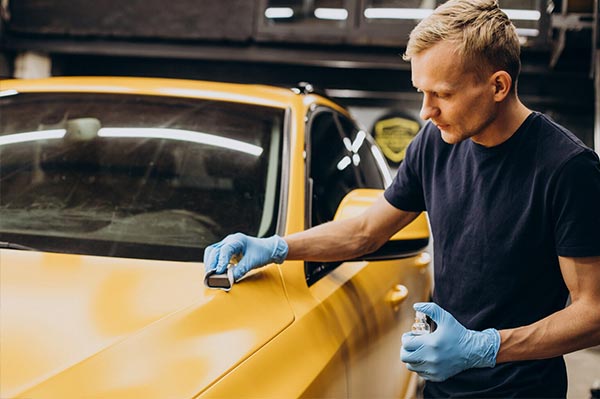
Paint application and cure adds 1–2 business days to any repair that requires refinishing. Color matching, primer application, base coat, clear coat, and oven cure must each proceed in sequence. Rushing paint stages produces visible defects — orange peel, color mismatch, or premature clear coat failure. A shop that quotes same-day paint on a multi-panel job is skipping steps.
Each step in the collision repair process must be completed in sequence, which is why collision repair timelines are measured in days, not hours. Parts ordering, disassembly, structural verification, panel work, paint, and cure each require their own time window - and none can be skipped or parallelized without degrading the quality of the final repair.
A professional shop does not hold your vehicle in a queue after completion. Once the repair is complete and passes final inspection, you should be notified for pickup within 24 hours. Extended shop holds after completion - common at high-volume shops - are not a legitimate timeline extension.

Authorization delays should not significantly extend your timeline at a shop that handles insurance claims proactively. A shop that waits passively for adjuster call-backs rather than communicating directly with the adjuster extends your timeline unnecessarily.
Unexplained delays, lack of updates, or vague timelines are not normal - they are signs of poor process management. A shop that cannot tell you specifically what step is causing the current delay, or when that step will resolve, is managing your repair passively rather than actively.
If your policy includes rental reimbursement coverage, your insurer will cover a rental vehicle during the repair period. Most rental reimbursement policies cover $30–$50 per day up to a total limit (typically $900–$1,500). If the other driver was at fault, their liability coverage typically includes rental reimbursement without a daily cap, up to completion of your repair.
Enterprise, Hertz, and National all have locations within 10–15 minutes of our Bedford, MA shop.

The most common legitimate reasons for extended timelines are parts backorder and hidden damage supplements requiring additional insurance authorization. Ask your shop directly: what specific step is causing the current delay, and what is the expected date for that step to resolve? A professional shop provides specific answers, not vague estimates. If the shop cannot identify what is causing the delay, that is itself a service quality concern.
Parts availability is the primary constraint you cannot control - but you can confirm the shop ordered parts before your vehicle arrives (not after drop-off) and that they are following up on backorders actively. Choosing a shop that handles insurance authorization proactively rather than waiting for callbacks also reduces the authorization lag time that some shops allow to stretch.
Yes, by 1–2 business days typically. Frame straightening is performed in stages with measurement between each pull, which cannot be rushed without producing an inaccurate result. The structural repair time is the correct time — a shop that claims to complete structural repair faster than the equipment and process allow is skipping measurement steps.
free at Invisible Touch, Bedford, MA. Every vehicle and damage pattern is different. Contact us for a specific repair timeline and a no-obligation estimate.