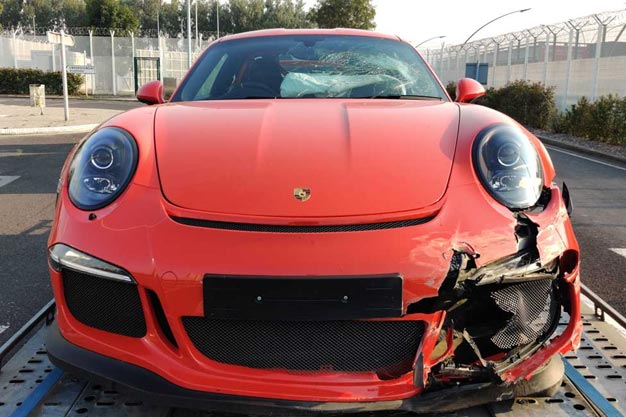
Collision repair follows a structured 6-step process: damage assessment, disassembly, structural repair, body and panel work, painting, and reassembly with final inspection. The entire sequence is designed to restore a vehicle to its pre-accident condition – structurally, cosmetically, and functionally. Most collision repairs take 5–20 business days, depending on damage severity, parts availability, and insurance approval timelines.
Understanding how the process works helps you set accurate expectations, communicate with your insurance adjuster, and evaluate the quality of work your body shop delivers at each stage.

200+ Happy Customers
in Bedford, MA
Collision repair begins with a thorough damage assessment. A certified technician inspects the vehicle, documents all visible damage, photographs every angle, and writes an initial repair estimate. This estimate itemizes labor hours, parts costs, and materials for the insurance company.
Not all damage is visible from the outside. Hidden structural damage, bent brackets, and displaced components often appear only after panels are removed. This is why many repairs involve a supplement - an updated estimate submitted to the insurer once the full scope of damage is confirmed during disassembly.
Know more about insurance collision repair
During disassembly, technicians remove damaged panels, bumper covers, trim, and interior components to expose the full extent of impact damage. This step reveals what the initial visual inspection could not: cracked mounting brackets, bent reinforcement bars, compromised wiring harnesses, and displaced structural components.
If additional damage is found, the shop documents it and submits a supplement to the insurance company. Supplement approval adds time to the repair - typically 2–4 business days — but skipping this step means hidden damage goes unrepaired.
Structural and frame repair restores the vehicle’s underlying geometry to factory specifications. Technicians use a computerized frame measuring system to identify misalignment, then apply hydraulic pulling equipment to bring the frame back to its original dimensions within millimeter tolerances.
This step is critical for vehicle safety. A frame that is even slightly off-spec affects suspension alignment, door closure, and crumple zone integrity. Shops that skip frame measurement after a moderate or severe collision are leaving structural damage unaddressed.
Know more about frame straightening.
Body and panel work addresses the visible damage — dented fenders, creased doors, cracked bumper covers, and damaged quarter panels. Depending on damage severity, panels are either repaired in place or replaced entirely. Minor dents may be corrected with PDR (paintless dent repair) or traditional hammer-and-dolly techniques. Severely damaged panels are removed and replaced with OEM or certified aftermarket parts.
Body filler is applied to minor surface imperfections after metal work is complete, then sanded to a smooth finish that matches the original contour of the panel. This step determines the final visual quality of the repair.
Painting is the most visible stage of collision repair, and the one most customers judge quality by. The process begins with surface preparation - sanding, cleaning, and masking adjacent panels. A corrosion-resistant primer is applied first, followed by a computerized color-matched basecoat and a protective clear coat.
Professional shops use a spectrophotometer to read the exact color of the existing paint and blend the new finish into adjacent panels so the repair is invisible. The vehicle is then baked in a downdraft spray booth at a controlled temperature to cure the finish. A proper paint job takes 24–48 hours from primer to final cure.
Know more about auto painting
Reassembly reverses the disassembly process — all removed parts, trim, lighting, sensors, and interior components are reinstalled and tested. Technicians verify that every door, hood, and trunk lid opens, closes, and aligns correctly. Electrical systems - including ADAS sensors, cameras, and parking sensors - are tested and recalibrated if necessary.
A final multi-point quality inspection checks paint finish, panel gaps, structural measurements, and overall fit. The vehicle is washed, detailed, and reviewed with the owner before delivery. At Invisible Touch Inc., every collision repair includes a written warranty and a final walk-around where we review the work with you before you drive away.
Schedule your collision repair estimate at Invisible Touch Inc. and Get a free quote.
Most collision repairs take 5–20 business days, depending on damage severity, parts availability, and insurance approval speed. Minor repairs, such as a bumper replacement, take 3–5 days. Major structural repairs involving framework and multiple panel replacements take 15–20 business days or longer. Know more How long does collision repair take.
Collision coverage pays for collision repair minus your deductible, regardless of fault. Comprehensive coverage applies to non-collision damage such as hail, vandalism, and falling objects. If the other driver is at fault, their liability insurance covers your repairs directly. Know more Does my insurance cover collision repair?
You have the legal right to choose any licensed body shop for your insurance repair in Massachusetts. Your insurer may recommend a preferred shop, but you are not required to use it. Choosing your own shop ensures the repair is done to your standards, not the insurer’s cost targets.
A supplement is an updated repair estimate submitted to the insurance company after hidden damage is discovered during disassembly. Supplements are common in moderate to severe collisions because not all damage is visible during the initial inspection. The supplement must be approved before repair can continue in those areas.
A properly executed collision repair restores the vehicle to pre-accident condition both structurally and cosmetically. Professional shops use computerized color matching and blend adjacent panels to make the repair invisible. Frame geometry is restored to factory specifications within millimeter tolerances.
Bring your vehicle to Invisible Touch Inc. for a complete hail damage inspection. We document every dent, coordinate with your insurance company, and restore your vehicle’s factory finish with Collision Repair.