Invisible-Touch-Inc
Schedule Your Appontment Today
(781) 271-9110

Hail Damage Repair: PDR vs. Traditional Repair

Paintless dent repair (PDR) is the standard repair method for hail damage when the paint surface is intact. PDR removes hail dents without touching the paint – no filler, no primer, no repainting – and is faster and less expensive than traditional panel repair for hail-damaged vehicles. Traditional repair methods are used only when paint damage accompanies the hail dents.

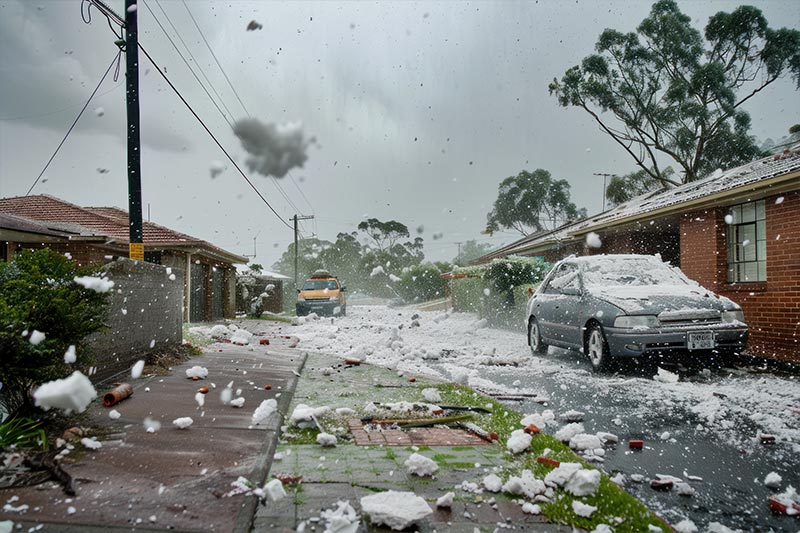
Hail Storm Damage

200+ Happy Customers
in Bedford, MA

Why PDR Is the Correct Choice for Most Hail Damage

Why-PDR-Is-the-Correct-Choice-for-Most-Hail-Damage

Hail damage produces multiple small, rounded dents across a vehicle’s horizontal surfaces — hood, roof, trunk lid, and upper door panels. These dents have a specific profile: shallow, rounded impact depressions without sharp creases, typically with intact paint because hail impacts compress the metal rather than shearing it.

This profile is ideal for paintless dent repair:

  •       The dents are rounded, not creased — the metal can be massaged back without stretching
  •       The paint is intact — no paint repair step required
  •       Multiple dents across large panel areas are more efficiently addressed by PDR than by filling and repainting each dent individually
  •       Factory paint is preserved — after PDR, the vehicle has its original factory finish, not a shop-applied refinish

PDR for hail damage is typically 30–50% less expensive than traditional panel repair for the same dent count because it eliminates all paint materials, prep time, and booth time from the job.

 

PDR (Paintless Dent Repair)

Traditional Panel Repair

Method

Specialized metal rods from behind the panel

Body filler, sanding, primer, color-matched repaint

Paint Surface

Factory paint is fully preserved

Affected panels repainted

Typical Hail Job Time

1–2 business days

3–5 business days

Cost Range (Avg Vehicle)

$400–$1,200

$1,500–$4,000+

Best For

Intact paint, rounded dents, full-vehicle hail

Cracked paint, stretched metal, and large hailstone damage

Resale Value Impact

Minimal — factory finish preserved

Paint repair disclosure applies

When Traditional Repair Is Required for Hail Damage

When-Traditional-Repair-Is-Required-for-Hail-Damage

Traditional repair methods are used when hail damage includes paint damage. This occurs when:

  •       Large hailstones (1 inch or larger) crack or chip the paint at the impact point
  •       The vehicle has pre-existing paint deterioration that cracks under hail impact
  •       The impact produces a dent severe enough that the paint stretches and cracks around the perimeter

In these cases, PDR addresses the metal deformation and traditional refinishing addresses the paint damage — sometimes on the same vehicle, with PDR on paint-intact dents and refinishing on paint-damaged areas.

A professional hail damage assessment identifies which dents are PDR-eligible and which require paint attention before quoting the job.

Hail Damage Repair Cost

PDR for hail damage costs $400–$1,200 for most passenger vehicles, depending on:

  •       Number of dents — hail jobs are often quoted per dent or per panel section
  •       Dent size — larger hailstone impacts require more work per dent
  •       Panel accessibility — roof dents with limited backing access take longer than hood dents

 Traditional hail repair (with paint) costs significantly more per affected panel — a hail-damaged hood requiring refinishing is $600–$1,200 for the hood alone, versus $150–$400 for the same hood via PDR if the paint is intact.

Can-You-Choose-Your-Own-Auto-Body-Shop-for-Insurance-Repairs

Does Insurance Cover Hail Damage?

Comprehensive-Coverage-Non-Collision-Damage

Hail damage is covered under the comprehensive portion of your auto insurance policy, subject to your comprehensive deductible. Comprehensive coverage applies to weather-related damage — hail, falling branches, flooding — rather than collision events.

Key points for Massachusetts hail claims:

  •       Comprehensive deductibles are typically $250–$500 — lower than collision deductibles
  •       Comprehensive claims generally do not affect your collision rate history
  •       Your insurer cannot require you to use their recommended shop — Massachusetts law gives you the right to choose your own licensed body shop
  •       We provide insurance documentation for all hail damage claims and work directly with all major Massachusetts carriers

If your deductible is less than the repair cost, filing the comprehensive claim is almost always the correct decision for hail damage.

Hail Damage Repair Timeline

PDR-only hail damage repair takes 1–2 business days for most passenger vehicles. Large vehicles with extensive coverage (trucks, full-size SUVs) may take 2–3 days.

Hail damage with paint repair adds 1–2 days for paint prep, application, and cure.

Most hail damage events produce a surge in repair demand — if your vehicle sustains hail damage in a regional storm event, booking promptly gives you the shortest wait time before your repair can be scheduled.

Hail Damage Repair FAQ

The key indicator is paint condition. Walk around the vehicle in direct sunlight and look for any white or silver paint chips at the center of hail impact points - this indicates the paint cracked on impact, and that area is not PDR-eligible. If the dents are visible but the paint surface is intact and unbroken across the entire dent, the damage is PDR-eligible. A professional assessment confirms eligibility before any work is quoted.

No hail damage should be repaired promptly for two reasons. First, exposed paint chips from hail cracking are entry points for rust, which accelerates in Massachusetts’s humid environment. Second, if you’re filing an insurance claim, new damage from subsequent weather events can complicate the claim scope. Address hail damage within 2–4 weeks of the event.

Correctly performed PDR for hail damage has minimal impact on resale value, and is significantly better for resale than traditional paint repair. A vehicle with PDR-repaired hail damage retains its factory paint - which buyers and appraisers value. A vehicle with hail damage repaired through panel repainting has a paint repair disclosure that affects resale value more significantly. PDR is the correct repair both for cost and for resale value preservation.

Schedule a hail damage assessment as soon as possible after a storm — within 1–2 weeks if possible. After a regional hail event, repair shops fill up quickly. Delaying repair also increases the risk of secondary damage if the vehicle is exposed to another weather event. Contact your insurance company promptly, then call us to schedule.

Free Hail Damage Assessment in Bedford, MA

Bring your vehicle to Invisible Touch Inc. for a complete hail damage inspection. We document every dent, coordinate with your insurance company, and restore your vehicle’s factory finish with paintless dent repair.

crossmenu