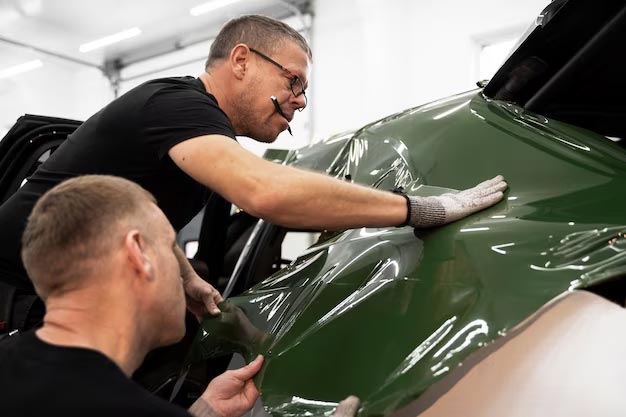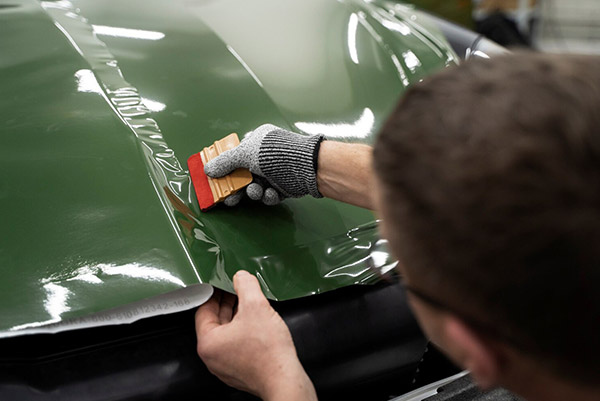
Paint protection film (PPF) is a physical urethane barrier installed over your vehicle’s paint to absorb stone chip impacts, road debris, and minor abrasion before they reach the surface. Invisible Touch Inc. installs PPF on all vehicle types, from partial front-end packages to full vehicle wraps, at our Bedford, MA shop serving the greater Boston metro.

200+ Happy Customers
in Bedford, MA

Paint protection film (PPF) is a multi-layer urethane film, typically 6–10 mils thick, that is applied directly to your vehicle’s painted surfaces using a pressure-sensitive adhesive. The film acts as a sacrificial barrier - stone chips, road debris, light scratches, and minor abrasion impact the film rather than the paint beneath it.
Modern PPF products include a top coat layer with self-healing properties: minor surface scratches and swirl marks in the film disappear with heat exposure - either from sunlight or warm water - as the top coat’s elastomeric polymers flow back into place. This means the film maintains a clean, clear appearance over years of use rather than accumulating surface wear.
PPF and ceramic coating are complementary, not competing. The most complete protection strategy uses PPF on high-impact zones (where chips happen) and ceramic coating over the PPF and on all remaining panels (for hydrophobicity, gloss, and chemical resistance). Invisible Touch installs both and can advise on the correct combination for your vehicle and usage.
The minimum coverage for any vehicle driven regularly on Massachusetts highways. Covers the highest-impact zones where stone chip damage is almost guaranteed over time.
Complete front-end protection extending to the full doors on both sides. Covers everything that takes meaningful road debris impact at highway speed.
Complete exterior PPF coverage on all painted surfaces. The choice for new luxury vehicles, show cars, and owners who want zero paint exposure on any panel.
All packages are priced by vehicle size and complexity. Final pricing is confirmed at consultation after assessing panel geometry and film material selection.
Coverage Packages at a Glance:
|
Package |
Zones Covered |
Ideal For |
Starting From |
|
Partial Front |
Full hood, front bumper, front fenders, side mirrors |
Daily drivers, Route 128/I-95 commuters, lease vehicles |
$900–$1,400 |
|
Full Front - Most Recommended |
Full hood, bumper, fenders, front doors, A-pillars, mirrors, headlights |
15,000+ miles/year, high-value vehicles, prior chip damage |
$1,800–$2,800 |
|
Full Vehicle Wrap |
All painted exterior surfaces, including the roof, trunk, rear bumper, and rear quarters |
New luxury/exotic vehicles, show cars, PPF + ceramic combo |
$4,000–$7,500+ |
Every vehicle is inspected before film cutting begins. We check the paint condition, note any existing chips or damage that should be documented pre-installation, and assess panel geometry for film routing decisions. Existing paint chips beneath PPF are visible through the film - any chips the buyer wants repaired should be addressed before installation.
PPF adhesive bonds to a chemically clean surface - any contamination present at installation becomes permanently trapped between the film and the paint. We perform an iron decontamination wash, clay bar, and IPA wipe-down before any film is cut or laid. This step is identical to ceramic coating prep and equally non-negotiable.
Film patterns are computer-cut using a plotter loaded with manufacturer templates specific to your vehicle’s year, make, and model. Computer-cut patterns ensure precise edge-to-edge coverage with clean, consistent wrap lines around panel edges. For complex panel geometries or custom coverage requests, hand-cut techniques are used where computer templates don’t account for factory variance.
The film is applied to each panel using a slip solution that allows repositioning before the adhesive sets. Each panel is squeegeed to remove trapped air and solution, then the film edges are wrapped around panel edges or trimmed to a clean edge line. Proper edge wrapping prevents film lifting and debris intrusion under the film over time.
After application, the film enters a curing period of 24–48 hours during which the adhesive fully bonds. During this time, we inspect every edge, seam, and corner for lift points. Minor moisture bubbles may appear during cure and dissipate naturally as the adhesive sets. We perform a final inspection under controlled lighting before vehicle release.
|
|
Paint Protection Film (PPF) |
Ceramic Coating |
|
Protection type |
Physical barrier — absorbs chip and scratch impacts |
Chemical barrier — resists water, UV, and chemical etching |
|
Protects against |
Stone chips, road debris, physical abrasion, and minor scratches |
UV fading, bird droppings, bug splatter, water spotting, oxidation |
|
Technology |
Multi-layer urethane film with self-healing topcoat |
Silicon dioxide polymer that bonds chemically to paint |
|
Appearance |
Transparent — adds slight gloss, invisible when installed correctly |
Enhances gloss and depth, adds wet-look reflectivity |
|
Maintenance |
Wash normally — avoid high-pressure at film edges |
pH-neutral wash products, no wax or polish on coated surface |
|
Cost range |
$900–$7,500+ depending on coverage |
$500–$2,500+, depending on tier and correction |
Professional-grade PPF lasts 7–10 years under normal conditions with proper maintenance. Film longevity depends on the film brand and grade, the quality of the installation, and how the vehicle is maintained. Premium films with UV inhibitors in the topcoat last longer and resist yellowing better than entry-level films. After 7–10 years, film can be removed and replaced — the paint beneath a properly installed and maintained film is typically in better condition than paint that was exposed without protection.
Premium modern PPF products do not yellow under normal conditions. Earlier-generation films (pre-2015) were prone to yellowing because their adhesive layers contained compounds that degraded under UV exposure. Current premium films use UV-stable adhesives and top coat chemistry that resist yellowing for the full rated lifespan. Entry-level or discount films may still yellow — Invisible Touch uses only premium-grade film stock rated for 7–10 year durability without yellowing.
Yes - PPF and ceramic coating are designed to work together. The correct application sequence is PPF first on the surfaces being filmed, then ceramic coating applied on top of the PPF film and across all remaining vehicle surfaces. The ceramic bonds to the PPF film on covered surfaces and to the clear coat on uncovered surfaces, producing consistent hydrophobic properties across the entire vehicle.
A new vehicle is the ideal candidate for PPF installation. The paint is in perfect condition with no existing chips to repair before coverage. Applying PPF immediately after purchase — before the vehicle accumulates any highway miles — ensures maximum protection from day one. Many owners of new luxury and European vehicles apply PPF as part of their purchase process.
PPF is fully removable without damaging the paint beneath it. When the film reaches the end of its service life or sustains damage beyond the self-healing threshold, it is removed using controlled heat and adhesive dissolution. The paint underneath is typically in pristine condition - protected from all the stone chips, UV, and abrasion the film absorbed. The new film can be applied immediately after removal on a clean surface.
PPF costs less than a single repaint of the surfaces it protects. A full front repaint on a luxury vehicle typically costs $2,000–$4,000+, depending on the vehicle and paint system. A full front PPF package starts at $1,800–$2,800 and protects those surfaces for 7–10 years. For any vehicle worth more than $40,000 or any vehicle the owner plans to keep for 5+ years, PPF is a net financial positive before considering the resale value preservation.
Contact Invisible Touch Inc. to discuss PPF coverage for your vehicle. We’ll assess your paint condition, recommend the right coverage package, and provide a written quote before any work begins.