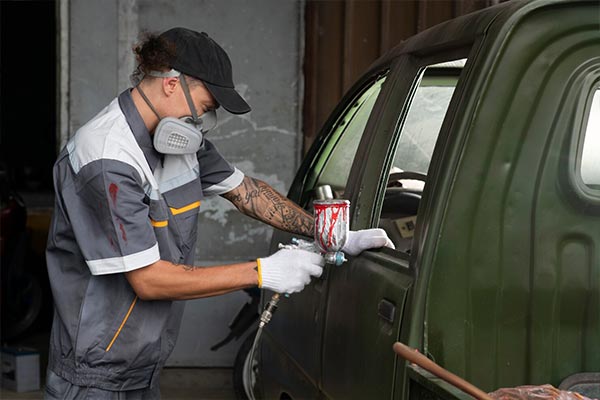
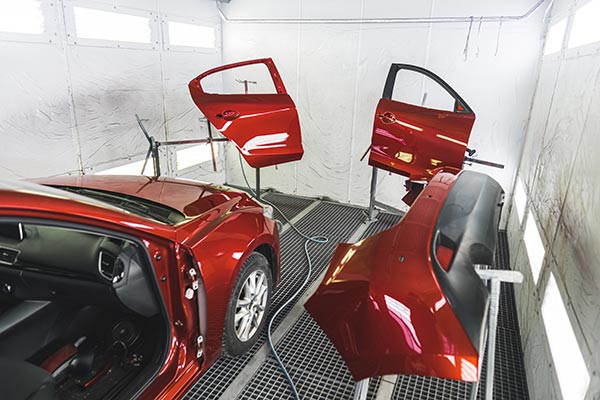
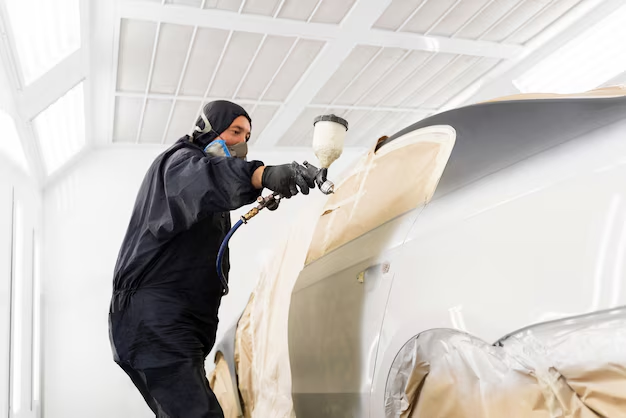
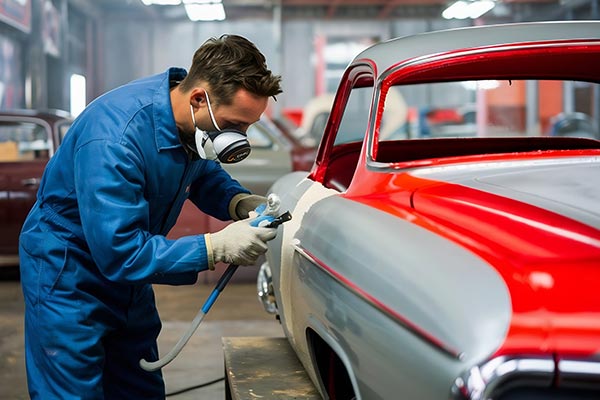
Invisible Touch Inc. performs auto painting and refinishing in Bedford, MA. We serve Bedford and the surrounding communities, including Lexington, Burlington, and Concord.

200+ Happy Customers
in Bedford, MA

Single-panel or multi-panel painting after collision repair, dent repair, or rust removal. We use your vehicle’s factory paint code to mix an exact color match and blend the repainted panel seamlessly into the surrounding finish. The result is invisible — no color difference, no visible edge between original and repainted surfaces.

Complete exterior refinishing for vehicles with faded, oxidized, or peeling factory paint. We strip the existing clear coat, repair surface imperfections, apply primer, and repaint the entire vehicle in your choice of factory or custom color. Full repaints restore the visual condition of high-mileage vehicles and prepare show cars and custom builds for a fresh finish.

Custom color changes, two-tone finishes, and specialty effects including metallic, pearl, and matte formulations. Custom auto paint projects require full vehicle preparation — including door jambs, edges, and engine bay trim — to ensure uniform coverage with no visible factory color beneath.

Car scratch repair for clear coat scratches, paint-depth scratches, and primer-depth damage. Shallow clear coat scratches can be corrected with compound polishing. Deeper scratches that penetrate the paint layer require spot sanding, primer, paint application, and clear coat to restore a seamless finish.

Rock chip and road debris damage corrected before rust spreads beneath the clear coat. Paint chip repair fills the damaged area with matched paint and clear coat to seal the exposed metal and restore surface continuity. Unaddressed chips become rust entry points within one New England winter.

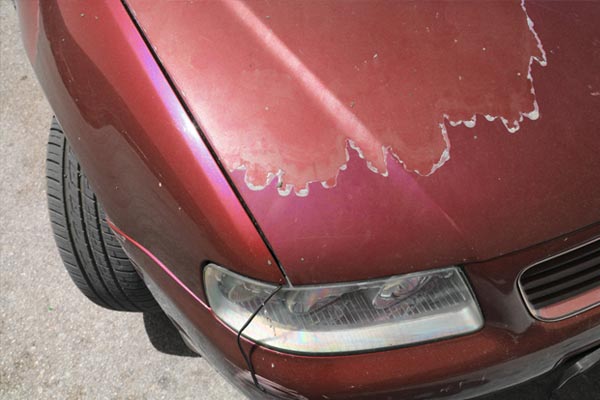
Clear coat failure, paint delamination, and peeling panels repaired by removing the failed coating, prepping the bare surface, and applying a complete new paint system - primer, base coat, and clear coat. Paint peeling is a structural coating failure, not a cosmetic blemish, and cannot be fixed with touch-up paint alone.
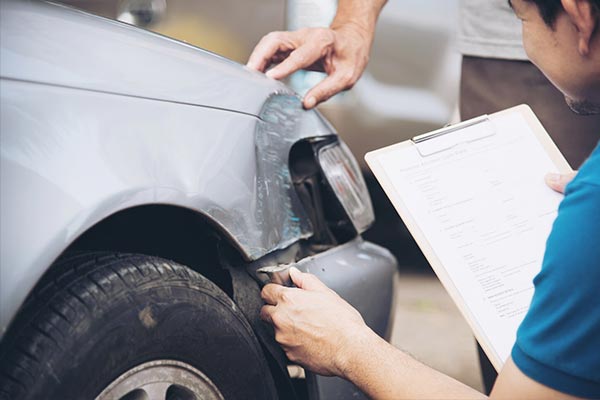
Every paint job begins with a full surface inspection to identify dents, scratches, rust, and clear coat damage that must be corrected before paint is applied. We pull the factory paint code from your vehicle’s identification plate and mix an exact color match using a spectrophotometer to account for paint fade on older vehicles.
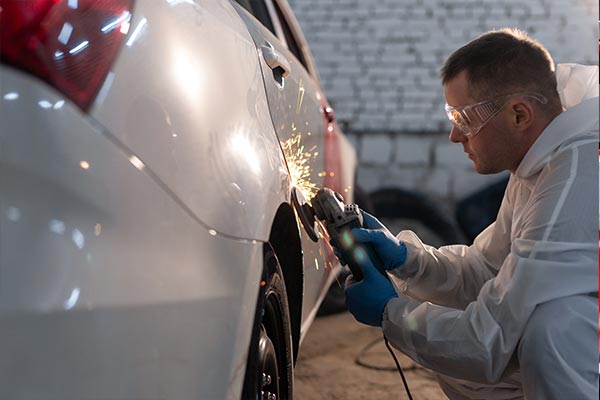
Preparation determines the final result. We sand surfaces for adhesion, fill imperfections with body filler, and apply corrosion-resistant primer. Panels not being painted are masked to prevent overspray. Durable finishes rely on prep. Some vehicles may benefit from paint correction to restore gloss without repainting and shine
High-build primer is applied to seal the prepared surface, block moisture, and provide a uniform base for color coats. Primer is sanded smooth between coats to eliminate texture before the base coat is sprayed. Skipping this step - or applying primer over unprepared surfaces - causes adhesion failure and premature peeling.
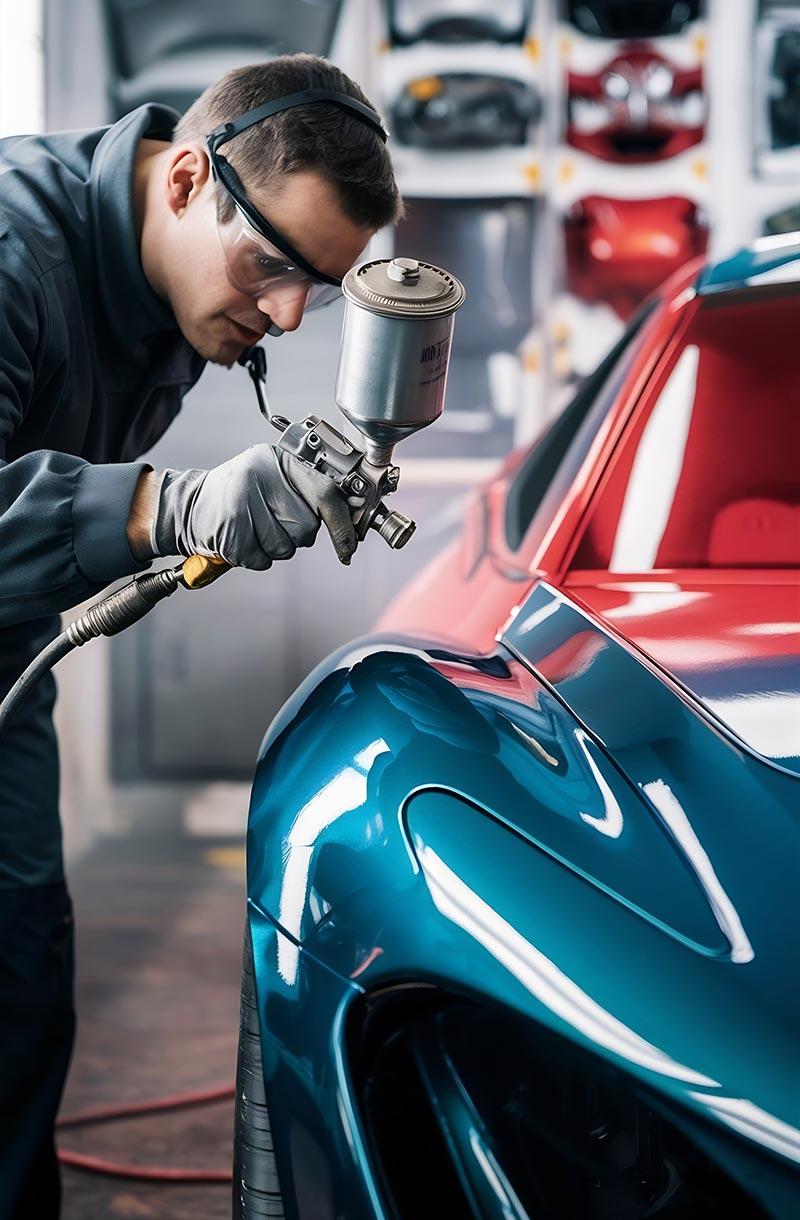
The base coat carries the vehicle’s actual color. We spray the base coat inside a downdraft spray booth - a controlled, filtered environment that pulls airborne particles downward and away from the paint surface. Multiple thin coats are applied to achieve full opacity and uniform depth without runs or sags.
Panel blending extends new paint into adjacent panels, feathering edges so transitions are invisible. Without blending, even a correct color match can show lines where repair ends. Under sunlight, differences in metallic flake and clear coat depth become visible making blending essential for a seamless, professional finish look.
Two to three coats of automotive clear coat are applied over the base coat for UV protection, chemical resistance, and gloss depth. The vehicle cures in the spray booth under controlled heat and airflow. After curing, the finish is wet-sanded if needed and machine-polished to match the gloss level of the surrounding panels.

All painting is performed inside a downdraft spray booth - a sealed, temperature-controlled environment with filtered airflow that pulls contaminants away from the paint surface during application. This eliminates dust nibs, fisheyes, and texture defects that occur in open-air painting. The booth also controls humidity and temperature for optimal paint adhesion and curing.
We use professional waterborne paint systems designed for automotive refinishing - not hardware-store spray cans or single-stage enamels. Professional systems deliver accurate color reproduction, UV stability, and chemical resistance that consumer-grade products cannot match.
Every color is mixed from the vehicle’s factory paint code and verified with a spectrophotometer to account for UV fade and oxidation on existing panels. Panel blending ensures the transition between old and new paint is invisible. If the color does not match, we repaint at no additional charge.
A fresh paint job is the ideal surface for ceramic coating or paint protection film — both bond best to clean, defect-free finishes. Drivers who invest in a full repaint or panel repair often protect their new finish with a ceramic coating for long-term UV resistance, hydrophobic performance, and gloss retention.

Road debris along Route 62 and Route 3, combined with Massachusetts road salt and seasonal freeze-thaw cycles, are the most common causes of paint chip and clear coat damage on vehicles we repair.
Frame straightening takes 1–3 days depending on the severity and type of structural damage. Minor sway or bend damage at a single point is typically corrected in one day. Compound damage types — such as twist combined with mash — require more setup time and multiple measurement cycles, extending the timeline to 2–3 days before bodywork begins.
A car straightened to factory specification is safe to drive. The goal of the repair is to return all structural reference points to within manufacturer tolerance - the same alignment the vehicle had when it left the factory. Invisible Touch confirms this with computerized measurement verification before the vehicle is released. A frame repaired to specification is structurally equivalent to one that was never damaged.
Signs that a vehicle may need frame straightening include uneven panel gaps after a collision, doors or trunk that don't close correctly, the steering wheel sitting off-center while driving straight, or unusual tire wear patterns that develop after an accident. The only way to confirm structural misalignment is through a computerized measurement baseline.
Most vehicles - both body-on-frame trucks and unibody cars - can be structurally straightened if the deformation is within correctable limits. In cases where impact forces have caused cracking, tearing, or metallurgical fatigue, section replacement is required rather than straightening.
Disclosed, properly repaired frame damage does not eliminate a vehicle's resale value, though it will appear on a vehicle history report if the repair was part of an insurance claim. A computerized measurement report showing post-repair alignment to factory specification is documentation that supports the quality of the structural repair.
Frame straightening typically ranges from $500 to $2,500 depending on the severity of the structural damage and the number of pull points required. Minor sway or bend damage at a single point falls at the lower end of that range. Compound damage types - twist, diamond, or mash - require more anchor setups and measurement cycles, which increases labor time and cost. Most frame repairs resulting from covered collisions are billed directly to the insurance carrier.
If your vehicle was in a collision, structural damage may not be visible from the outside. Invisible Touch Inc. provides a full computerized frame assessment at no charge — so you know exactly what the repair requires before committing to anything.