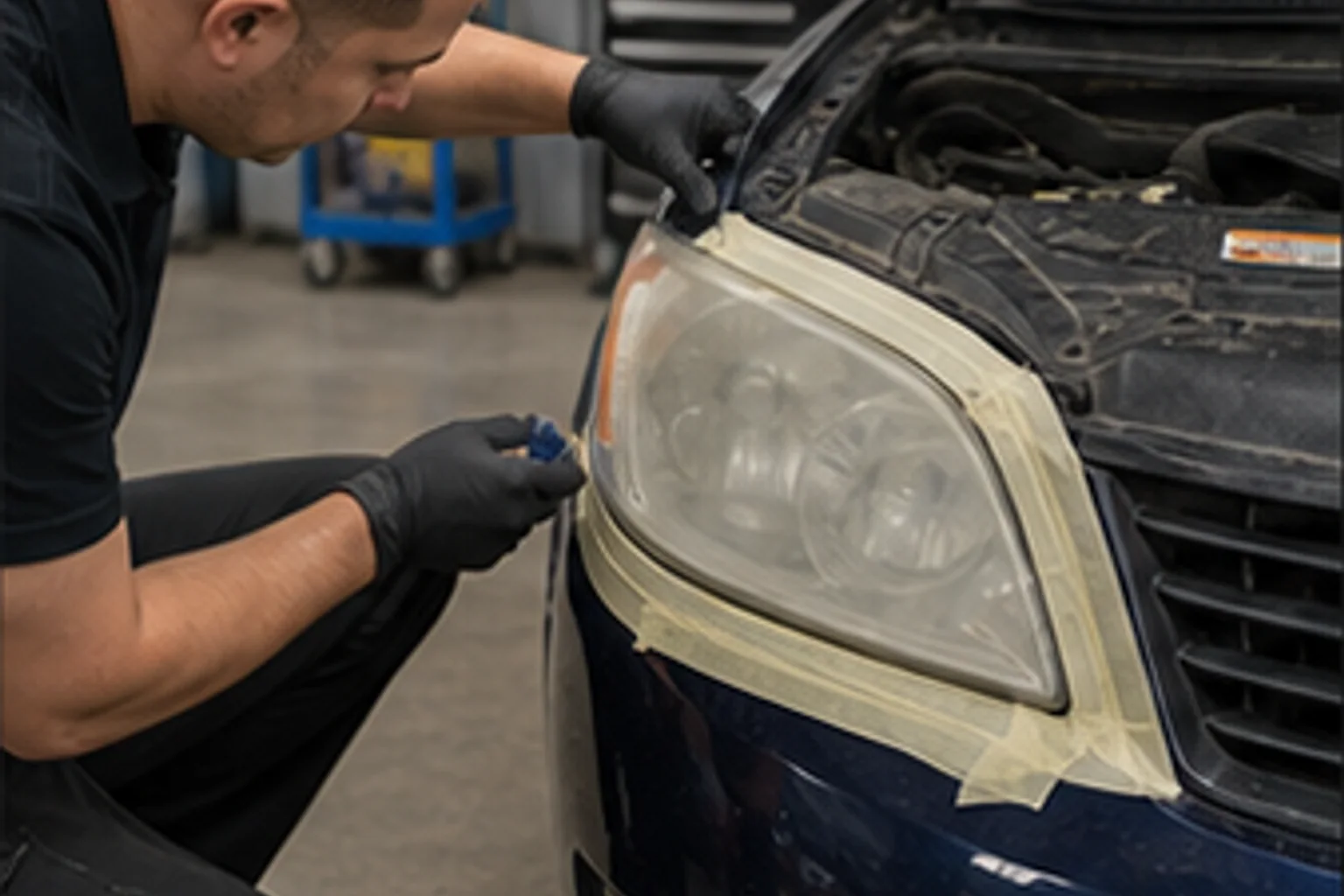
Inspection and Masking
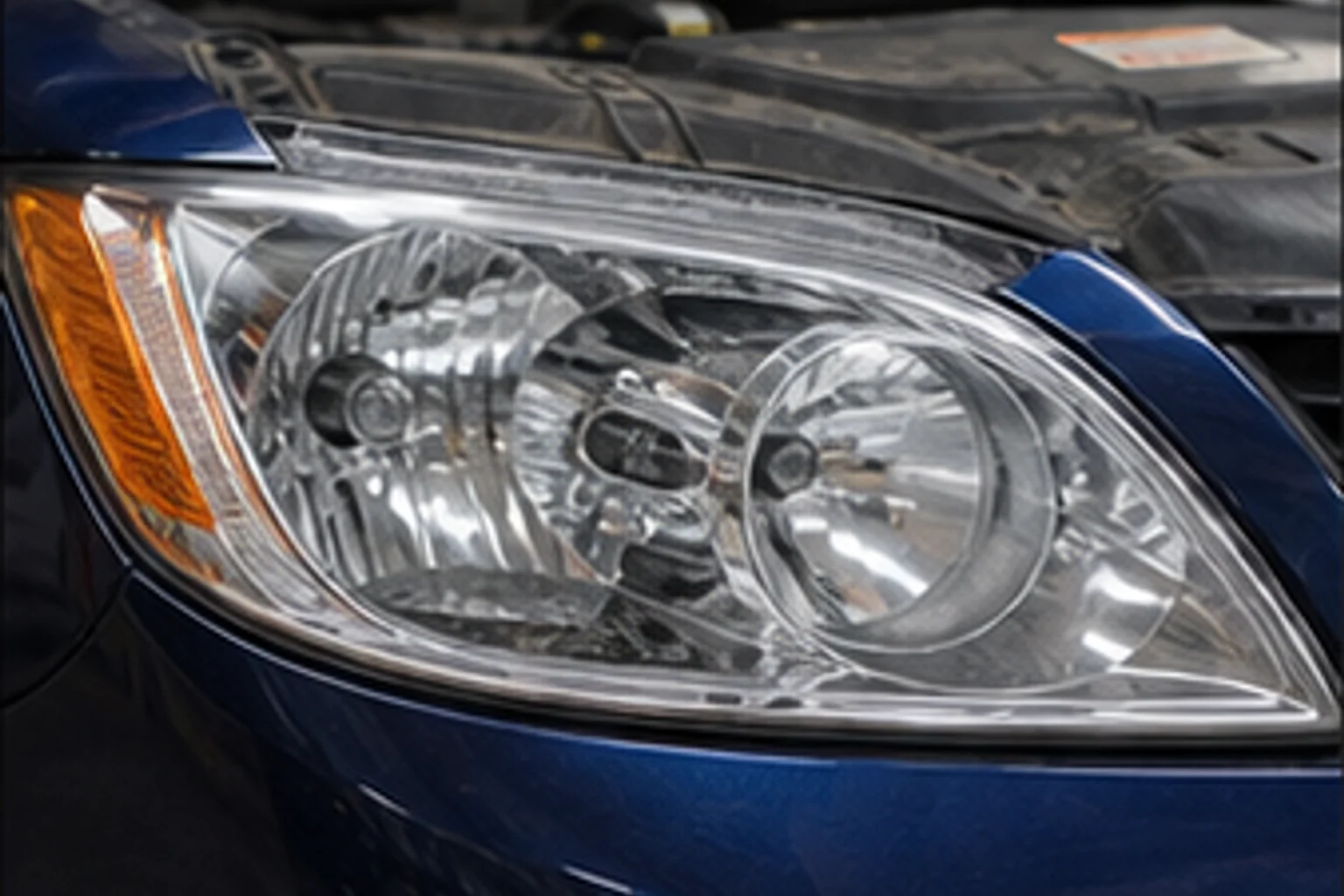
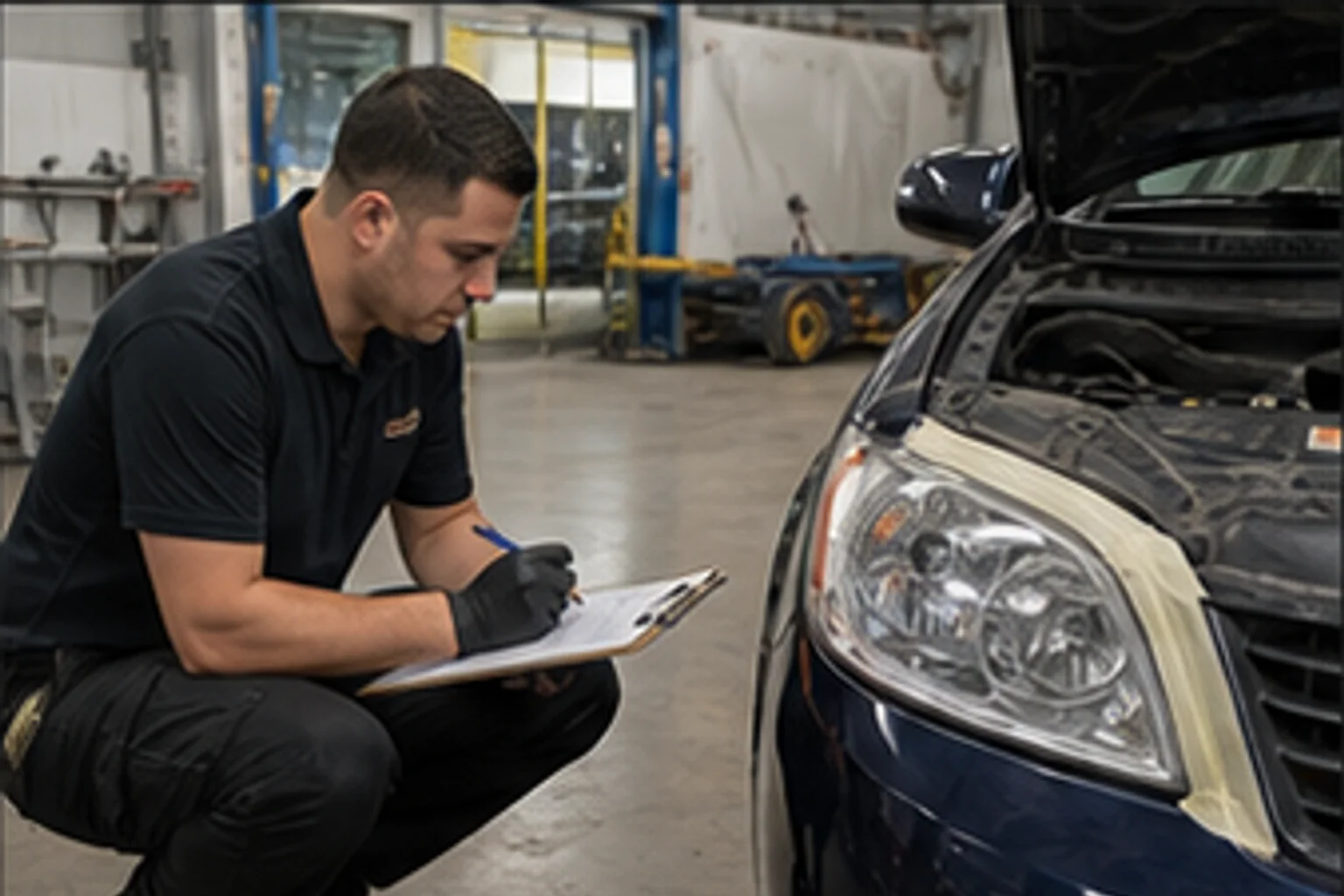
Each headlight is inspected for internal damage, seal integrity and oxidation severity before any work begins. Surrounding paint and bodywork are masked to protect adjacent surfaces during sanding and polishing.

Home/Services/Headlight Restoration
Headlight restoration
We remove yellowing, oxidation and cloudiness from plastic headlight lenses — restoring optical clarity, improving nighttime visibility, and protecting the lens surface with a fresh UV coating that prevents rapid re-oxidation. We serve Bedford, MA, and the greater Boston metro area.
Headlight restoration
Modern headlight lenses are polycarbonate plastic — lightweight and impact-resistant, but it degrades under UV radiation once the factory coating wears through. The correct fix is polishing the lens and applying a fresh UV-protective coating, not polishing alone.
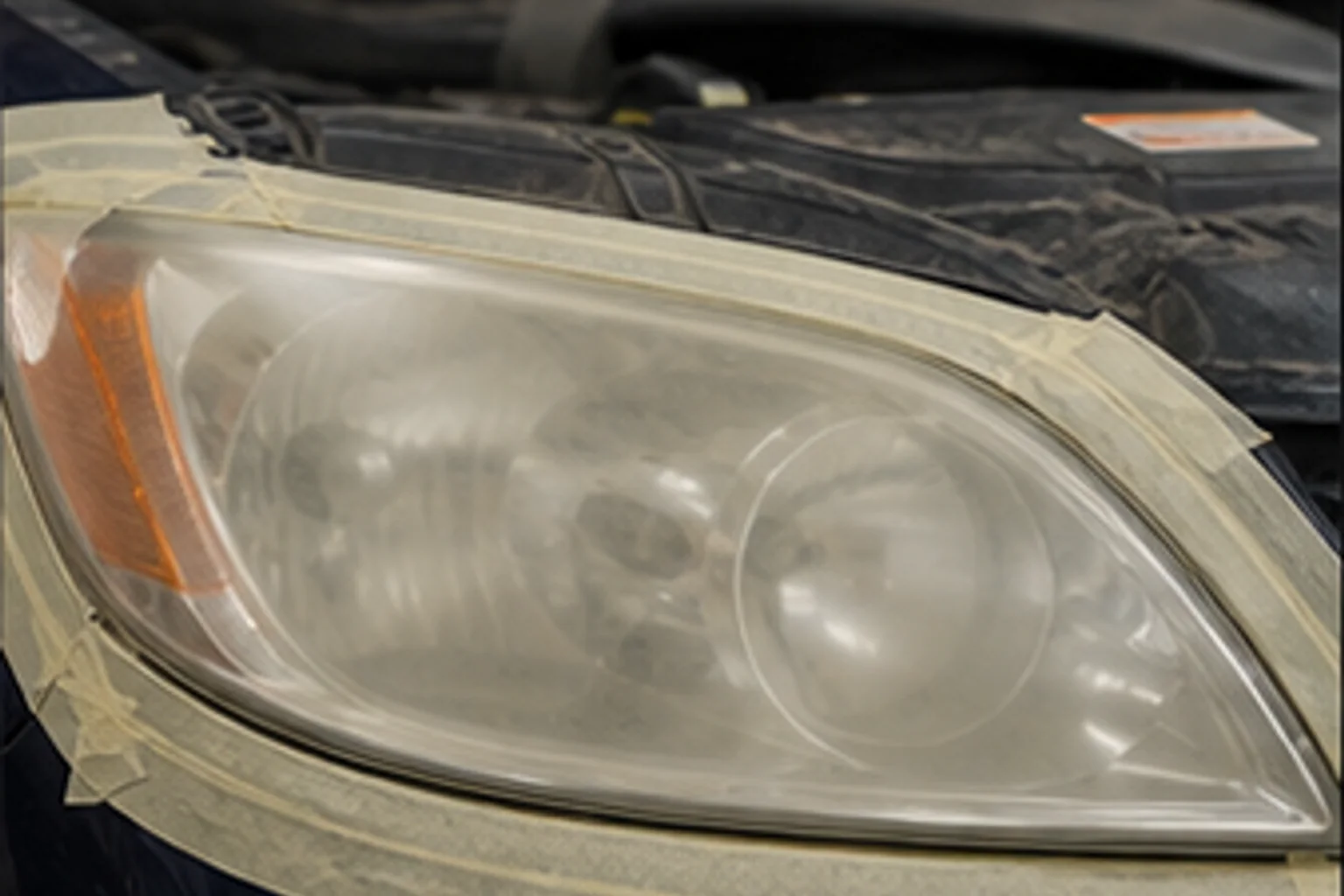
Factory headlights include a thin UV-protective coating applied at the lens surface, but this coating breaks down after 5–8 years of sun exposure, leaving the bare polycarbonate unprotected. In Massachusetts, intense summer sun, temperature extremes and road salt exposure accelerate the process — most vehicles with 8–12 years of New England road use show noticeable headlight yellowing.
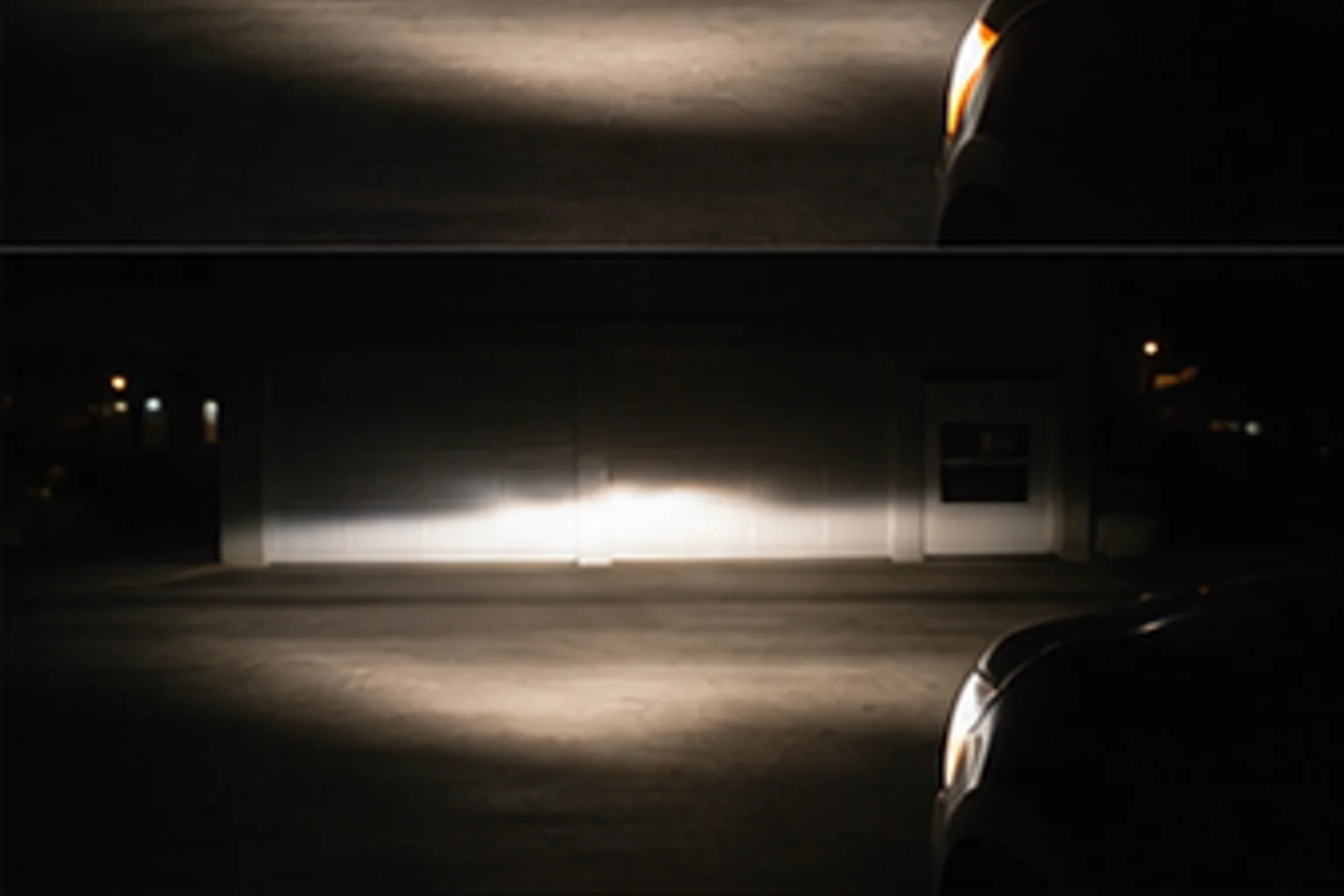
As oxidation progresses it measurably reduces light output through the lens. Severely oxidized headlights can transmit as little as 20% of their original light output, significantly reducing nighttime visibility and increasing stopping distance at speed. In Massachusetts, headlights that fail to produce adequate illumination can also fail the annual state safety inspection — making restoration a compliance issue, not just a cosmetic one.
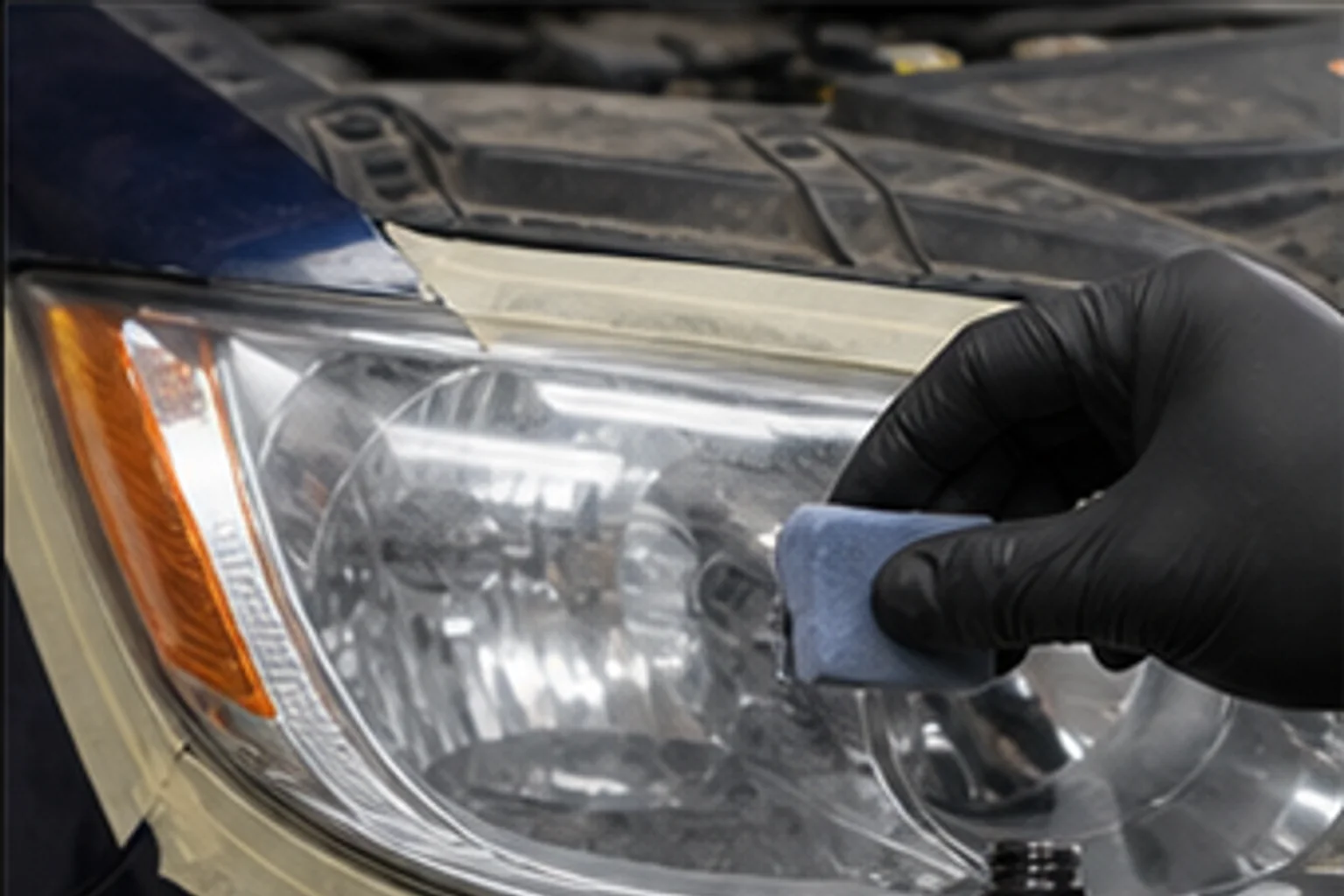
DIY headlight restoration kits that omit the UV coating step produce results that revert to yellow within 6–12 months, because the polished polycarbonate is still unprotected from UV. A professional-grade UV-protective coating applied after polishing is what keeps the lens clear for years, not months.
What it covers
Every restoration includes the UV coating step — polishing alone is not the service we offer.
Each headlight is inspected for internal damage, seal integrity and oxidation severity before any work begins. Surrounding paint and bodywork are masked to protect adjacent surfaces during sanding and polishing.
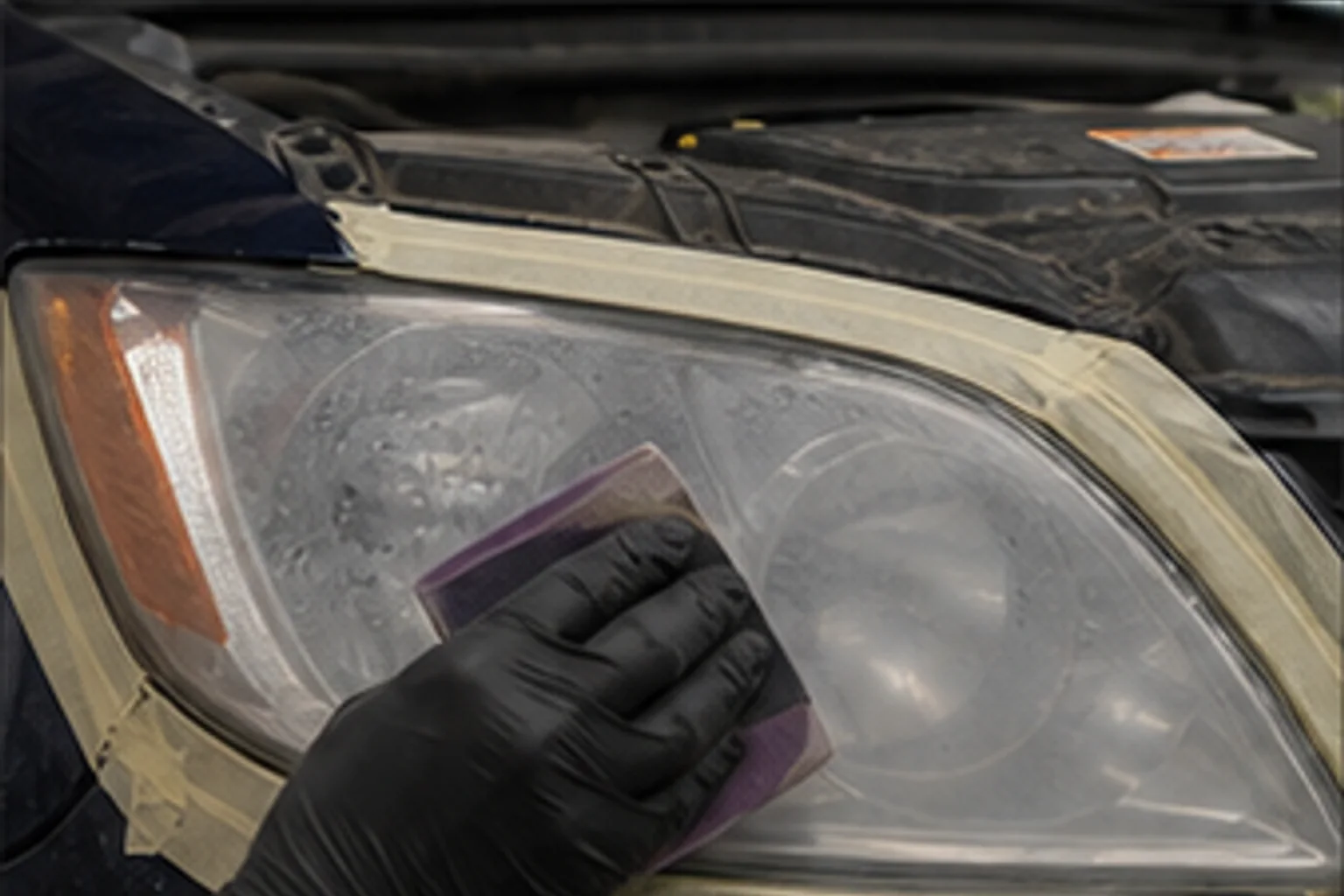
The oxidized outer layer is removed through a progressive wet sanding sequence — starting with a coarser grit to remove the damaged surface layer, then stepping through finer grits to restore optical smoothness and expose fresh, clear polycarbonate.
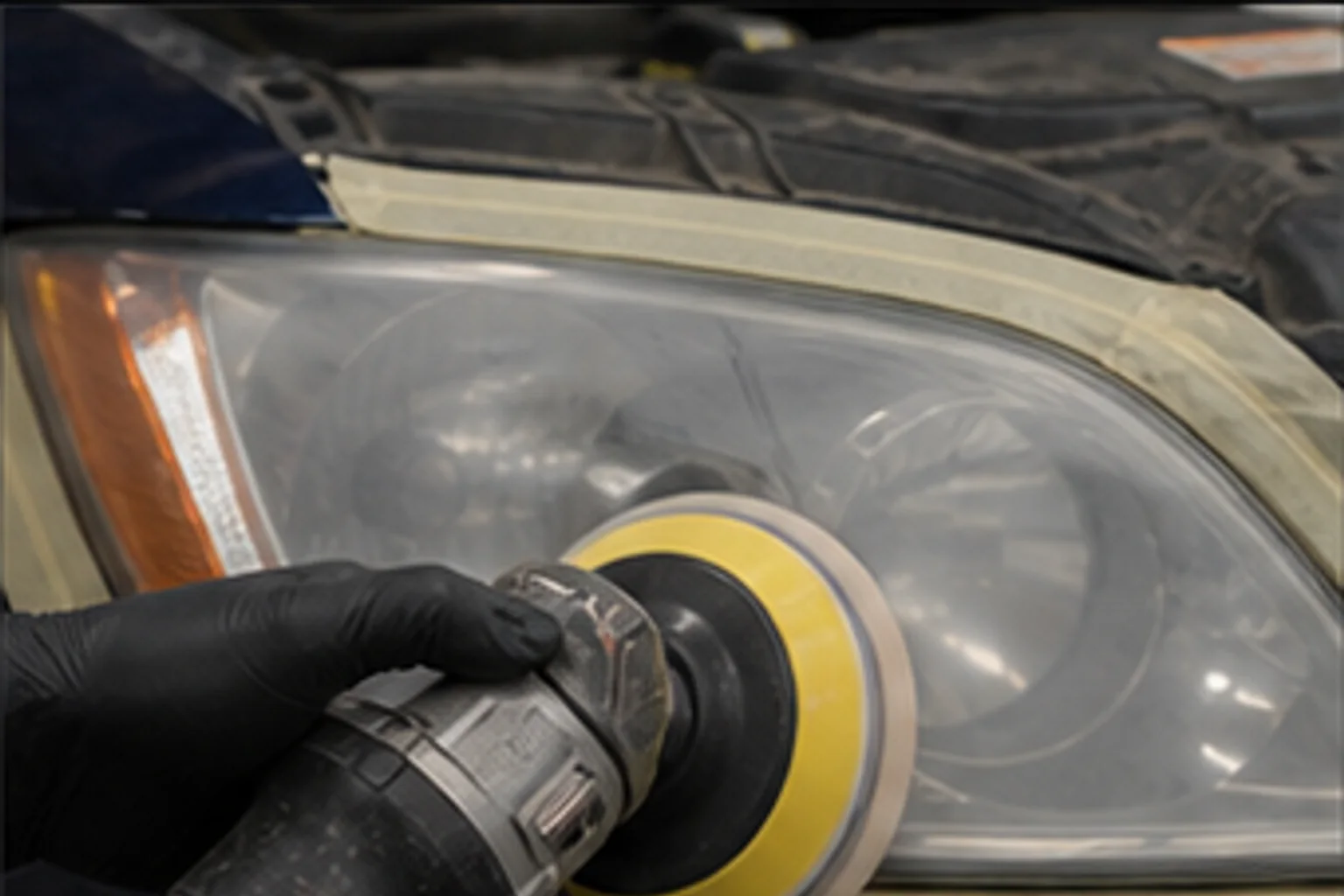
After sanding, the lens is machine-polished to restore full optical clarity. The polishing compound removes micro-scratches left by the final sanding stage, producing a smooth, transparent lens surface.
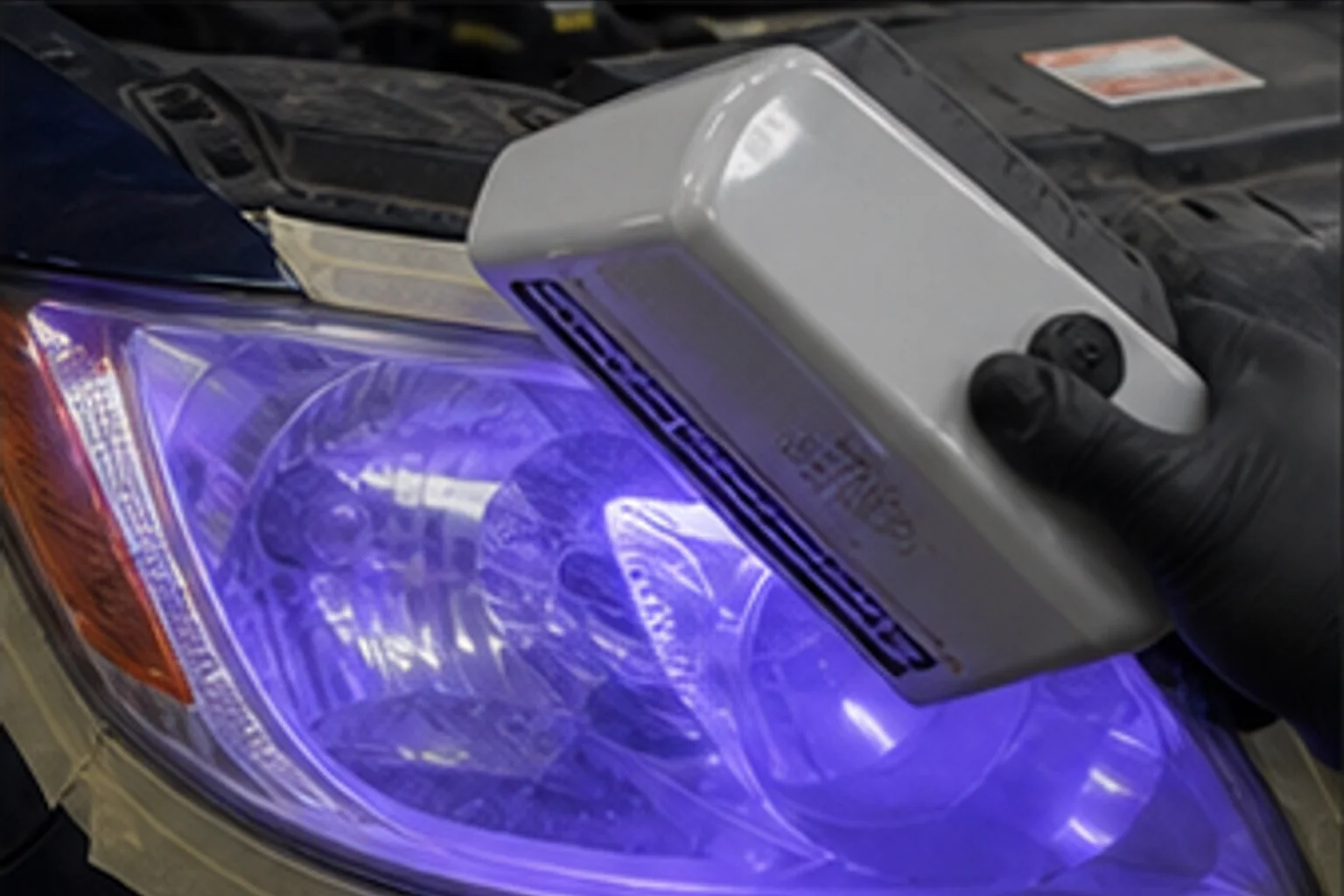
A professional-grade UV-protective coating is applied to the restored lens surface — the step that prevents re-oxidation. Without it, polished polycarbonate begins degrading again immediately; with it, the lens stays clear for 2–4 years under normal New England exposure.
Headlights that fail to produce adequate illumination can fail the Massachusetts annual state safety inspection. Restoring lens clarity addresses the light-transmission problem at its source, rather than treating it as purely cosmetic.
Early-stage oxidation, typically appearing as the factory UV coating starts breaking down after 5–8 years of sun exposure. Caught at this stage, restoration is a straightforward polish-and-coat job.
Severely oxidized headlights can transmit as little as 20% of their original light output. Restoration requires the full multi-stage wet sanding sequence to remove the oxidized layer before polishing and coating.
The thin UV-protective coating applied at the factory breaks down after 5–8 years of sun exposure, leaving the bare polycarbonate unprotected and accelerating yellowing. Most vehicles with 8–12 years of New England road use show this.
DIY headlight restoration kits that omit the UV coating step produce results that revert to yellow within 6–12 months, because the polished polycarbonate is still unprotected from UV. We re-polish and apply a professional UV coating to fix this properly.
In Massachusetts, headlights that fail to produce adequate illumination can fail the annual state safety inspection. Restoring optical clarity addresses the reduced light output that causes that failure.
How it works
Sanding and polishing without a UV coating afterward is not a finished job — the coating step is what makes the result last.
Each headlight is inspected for internal damage, seal integrity and oxidation severity before any work begins. The surrounding paint and bodywork are masked to protect adjacent surfaces during the sanding and polishing stages.
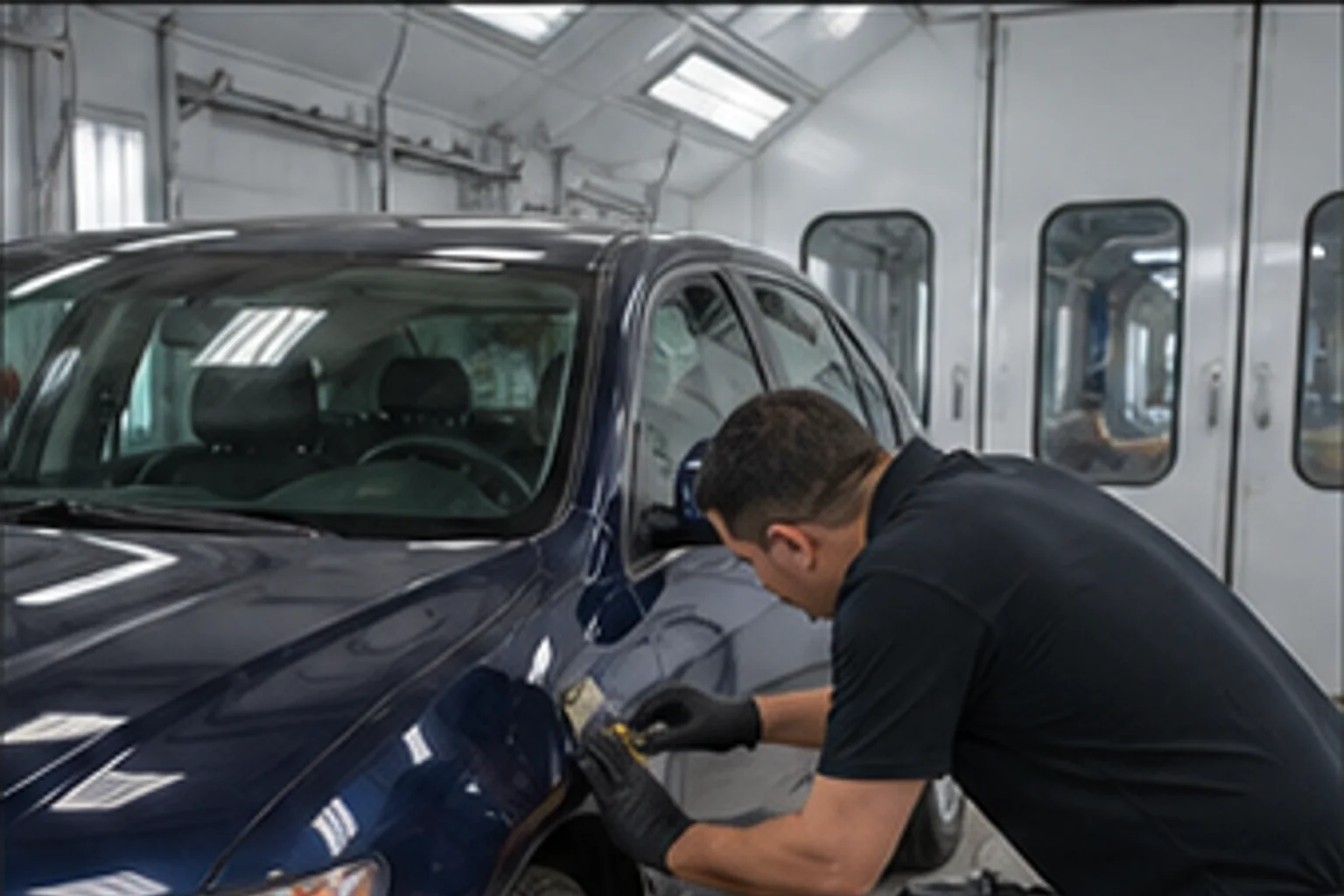
The oxidized outer layer is removed through a progressive wet sanding sequence — starting with a coarser grit to remove the damaged surface layer, then stepping through finer grits to restore optical smoothness. This exposes fresh, clear polycarbonate beneath the oxidation.
After sanding, the lens is machine-polished to restore full optical clarity. The polishing compound removes micro-scratches left by the final sanding stage, producing a lens surface that's smooth and transparent.
A professional-grade UV-protective coating is applied to the restored lens surface. This is the critical step that prevents re-oxidation — without it, the polished polycarbonate begins degrading again immediately. With it, the lens remains clear for 2–4 years under normal New England exposure conditions.
Why this shop
We never stop at polishing. Every restoration ends with a professional-grade UV-protective coating, the step that actually prevents the yellowing from coming back within months.
The oxidized layer is removed through a full progressive wet sanding sequence, coarse to fine, so what's underneath is genuinely clear polycarbonate — not oxidation polished thin.
Restoration works with the headlight assembly you already have, rather than requiring a replacement part to be sourced and installed — the faster option in most cases.
We restore headlights on all vehicle types at our Bedford shop, backed by our lifetime workmanship warranty.
TownDrive to shop
Restore your headlights before your next inspection — call (781) 271-9110.
Headlight lenses are polycarbonate plastic protected by a thin factory UV coating that breaks down after 5–8 years of sun exposure. Once that coating fails, the bare polycarbonate oxidizes and turns yellow, hazy and opaque — a process New England's intense summer sun, temperature extremes and road salt accelerate.
It's more than cosmetic. As oxidation progresses it measurably reduces light output through the lens — severely oxidized headlights can transmit as little as 20% of their original light output, reducing nighttime visibility and increasing stopping distance at speed.
With a professional UV-protective coating applied after polishing, the lens remains clear for 2–4 years under normal New England exposure conditions. Without a UV coating step, the polished polycarbonate is unprotected again immediately and yellowing returns within 6–12 months.
DIY kits that omit the UV coating step produce results that revert to yellow within 6–12 months, because the polycarbonate is still unprotected from UV after polishing. The correct solution is polishing the lens and applying a fresh UV-protective coating, not polishing alone.
In Massachusetts, headlights that fail to produce adequate illumination can fail the annual state safety inspection. Restoring lens clarity addresses the reduced light-transmission problem that causes that failure, making it a compliance issue as well as a cosmetic one.
Restoration works with the headlight assembly you already have, rather than requiring a replacement part to be sourced and installed — which is why it's the faster option in most cases.
Free estimates · All major insurers · Bedford, MA since 2005